

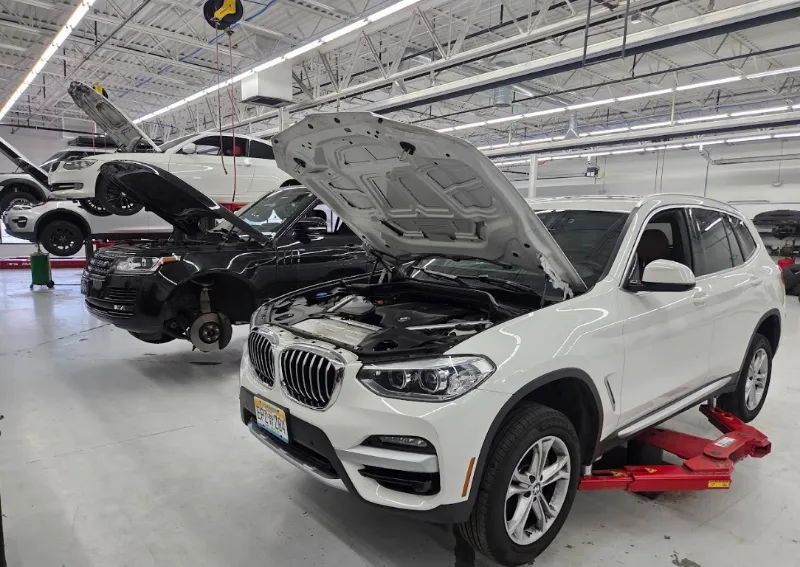
Expert BMW High-Pressure Fuel Pump Replacement That Saves You Thousands
Your BMW’s high-pressure fuel pump is failing. You know it—the rough idling, hesitation during acceleration, the persistent check engine light, and worsening fuel economy. You’ve seen the dealership quote, and those inflated prices made your stomach turn.
At JCB Euro, located at 4747 S. Santa Fe Dr., Englewood, CO 80110, we provide dealership-quality BMW high-pressure fuel pump replacement. No upselling, no games—just honest diagnostics, transparent communication, and expert service from technicians who understand the complexities of BMW fuel systems.
Modern BMW direct injection systems operate under extreme pressures and require precise diagnostic equipment, specialized tools, and comprehensive knowledge of BMW-specific fuel system architecture. Our team has invested in the training, equipment, and experience necessary to diagnose and repair these sophisticated systems correctly the first time.
Why Your BMW’s High-Pressure Fuel Pump Failure Can’t Wait
Immediate Performance Issues:
The symptoms you’re experiencing aren’t just inconvenient—they’re warning signs of a fuel system that can no longer maintain the precise pressure required for optimal combustion. Rough idling and embarrassing vibrations at stoplights occur because the fuel pump cannot maintain consistent pressure, causing irregular fuel delivery to the cylinders.
- Rough idling and vibrations at stoplights
- Hesitation during acceleration, creating safety risks
- Reduced fuel economy, costing you hundreds in extra fuel
- Intermittent check engine lights causing constant anxiety
- Hard starting, especially on cold mornings
- Loss of power at highway speeds, compromising safety
Hesitation during acceleration represents a genuine safety concern, particularly when merging onto highways or navigating busy intersections. Reduced fuel economy happens because your BMW’s engine computer attempts to compensate for inadequate fuel pressure by adjusting injection timing and duration, burning more fuel to produce the same power output.
Hidden Damage:
Beyond the symptoms you can feel and see, a failing high-pressure fuel pump creates cascading damage throughout your BMW’s engine systems. The starved direct injection system causes incomplete combustion, meaning fuel doesn’t burn completely in the cylinders. This incomplete combustion creates multiple problems simultaneously.
- Starved direct injection system causing incomplete combustion
- Unburned fuel washing oil off cylinder walls, accelerating engine wear
- Catalytic converter damage from unburned fuel
- Carbon buildup degrading performance
- Engine computer entering “limp mode”” to protect components
Unburned fuel escaping past the piston rings washes protective oil off cylinder walls, dramatically accelerating wear on pistons, rings, and cylinder walls. Your catalytic converter faces particular risk from unburned fuel entering the exhaust system, igniting in the catalytic converter, and creating excessive heat that can melt the catalyst substrate.
Long-Term Risks:
A failing high-pressure fuel pump can lead to catastrophic engine damage. Your BMW’s high-pressure fuel system operates at over 2,000 PSI, and failure threatens the entire engine. When the fuel pump fails completely, the sudden loss of fuel pressure can cause the engine to run extremely lean, generating excessive heat that can warp cylinder heads, damage valves, or even crack engine blocks.
How JCB Euro Delivers Dealership-Quality BMW Service
Comprehensive Diagnostics:
Accurate diagnosis forms the foundation of effective repair. Many shops replace the high-pressure fuel pump based on symptoms alone, potentially missing underlying issues or misdiagnosing the problem entirely. Our diagnostic process eliminates guesswork through systematic testing and verification.
- Fuel system pressure testing with BMW-specific equipment
- Computer scans to identify fault codes
- Visual inspection of fuel system components
- Documentation with photos and videos explaining failures
We begin with fuel system pressure testing using equipment calibrated specifically for BMW fuel systems. Computer scans reveal fault codes stored in your BMW’s engine control module, but fault codes alone don’t tell the complete story. Visual inspection identifies issues that electronic diagnostics might miss, ensuring we address all contributing factors.
Quality Parts:
The parts we install determine how long your repair lasts and how well your BMW performs after service. We offer options to fit different needs and budgets while maintaining our commitment to quality and reliability.
- OEM BMW parts or premium aftermarket options like Bosch and Pierburg
- No cheap offshore components that fail prematurely
OEM BMW parts represent the gold standard—identical to the components installed at the factory. Premium aftermarket manufacturers like Bosch and Pierburg often supply components to BMW for factory installation, offering reliability at a lower cost.
Expert Installation:
Proper installation requires specialized knowledge, appropriate tools, and meticulous attention to BMW-specific procedures. High-pressure fuel systems present unique challenges that general repair shops often underestimate.
- Specialized tools for BMW fuel systems
- Proper fuel system depressurization and safety protocols
- Replacement of related components (filters, seals, O-rings)
- System bleeding, pressure testing, and computer reprogramming
Specialized tools for BMW fuel systems include pressure relief adapters, specific socket sizes, torque wrenches calibrated for fuel system fasteners, and diagnostic equipment for system verification. Related component replacement ensures long-term reliability, preventing premature failure and eliminating the need for repeat repairs.
Transparent Communication:
You deserve to know what’s happening with your BMW throughout the repair process. Uncertainty creates anxiety, and surprises damage trust. Our communication protocols keep you informed and involved.
- Clear timelines (typically 2-3 days for replacement)
- Photo updates during repairs
- Immediate contact if additional issues arise
- No surprise charges or upsells
- Final walk-through explaining completed work
Clear timelines help you plan around your vehicle being in service. Photo updates during repairs show you exactly what we’re doing and what we’re finding. Immediate contact about additional issues respects your time and budget, ensuring you understand what your BMW needs.
Why BMW Owners Choose JCB Euro
Real Expertise:
BMW engineering represents some of the most sophisticated automotive technology available. Direct injection fuel systems, turbocharged engines, and complex engine management systems require specialized knowledge that general repair shops simply don’t possess. Our technicians invest continuously in BMW-specific training, staying current with technical service bulletins, common failure modes, and repair procedures.
Convenience:
Located at 4747 S. Santa Fe Dr., Englewood, CO 80110, we’re easily accessible from throughout the Denver metro area. Weekend appointments accommodate customers who can’t bring their BMW in during the week. We offer flexible scheduling, loaner vehicles when available, and shuttle service to minimize inconvenience.
Peace of Mind:
Imagine driving your BMW without hesitation, rough idling, or check engine lights. You’ll regain confidence in your vehicle and enjoy driving again. That peace of mind extends beyond just eliminating symptoms—it comes from knowing the repair was done correctly, with quality parts, by technicians who understand your BMW’s systems.
Understanding BMW High-Pressure Fuel Pump Systems
BMW’s direct injection system delivers fuel at high pressures directly into the combustion chamber, creating exceptional performance and efficiency. The high-pressure fuel pump serves as the heart of this system, pressurizing fuel from the low-pressure supply pump to over 2,000 PSI. This extreme pressure allows fuel injectors to atomize fuel into an extremely fine mist that burns efficiently and completely.
Common BMW Models We Service:
Our experience spans the full range of BMW models, with particular expertise in vehicles known for high-pressure fuel pump issues.
- 3-Series (E90, F30, G20): N54 and N55 engines are prone to pump failure between 60,000-100,000 miles.
- 5-Series (E60, F10, G30): Symptoms include drivetrain malfunction warnings and rough running under load.
- X3 and X5 (E83, F25, G05): Heavier vehicle weight and mountain driving stress the fuel system.
Why BMW High-Pressure Fuel Pumps Fail:
Understanding failure causes helps prevent future problems and informs maintenance decisions. While some fuel pump failures result from design vulnerabilities, others stem from preventable causes.
- Design vulnerabilities in N54 and N55 engines
- Low-quality or contaminated fuel
- Inadequate fuel filter maintenance
- Extended oil change intervals
- Colorado’s altitude and temperature extremes
Schedule Your BMW High-Pressure Fuel Pump Diagnostic Today
Every day you delay increases the risk of damage. That rough idle, hesitation, and check engine light won’t fix themselves. It’s time to solve this problem with a trusted specialist.
Here’s What Happens Next:
- Call or Text (720) 548-6804: Describe your symptoms, and we’ll schedule a diagnostic appointment.
- Comprehensive Diagnostics: Bring your BMW to 4747 S. Santa Fe Dr., Englewood, CO 80110. We’ll test and document the issue.
- Transparent Estimate: Receive an itemized estimate with options for OEM or aftermarket parts.
- Expert Repair: Approve the work, and we’ll complete the repair in 2-3 days with photo updates.
- Final Inspection: Test drive and walk-through ensure your BMW is running perfectly.
Call JCB Euro at (720) 548-6804 or visit us at 4747 S. Santa Fe Dr., Englewood, CO 80110. Let’s get your BMW running the way it should—and give you back the peace of mind you deserve.
“