

When Your Steering Feels Heavy, Makes Noise, or Triggers Warning Lights, Your Family’s Safety Is On the Line
You’re merging onto I-25 during rush hour when you hear it again—that unsettling whining noise from under the hood. The steering wheel feels heavier, requiring more effort to turn. Maybe the power steering warning light has flashed on your dashboard, sending a jolt of anxiety through your chest.
This isn’t just an inconvenience—it’s a safety issue. Every time you drive, you wonder: Is today the day the steering completely fails? Will I be able to control the vehicle if something goes wrong? And then there’s the financial worry: How much will this cost? Can I trust the shop to fix it right?
If you’ve already visited a dealership, you might have received a quote that made your stomach drop. Maybe you’ve tried a general mechanic, only to find they lack the specialized tools for your vehicle’s complex systems. Or perhaps you’ve been topping off power steering fluid, knowing it’s just a temporary fix.
Here’s the truth: You don’t have to choose between your family’s safety and your financial security.
Why Power Steering Problems Demand Immediate Attention
Power steering issues aren’t cosmetic—they’re critical. When your steering system begins to fail, you lose one of your vehicle’s most essential safety features: control. The power steering system is designed to make maneuvering your vehicle effortless and precise, allowing you to react quickly in emergency situations. When this system begins to deteriorate, your ability to safely navigate traffic, avoid obstacles, and maintain control in challenging driving conditions becomes severely compromised.
Common Power Steering Warning Signs:
Whining or groaning noises when turning, especially at low speeds, indicate that your power steering pump is struggling to maintain proper hydraulic pressure. This sound often becomes more pronounced during sharp turns in parking lots or during slow-speed maneuvers.
Heavy or stiff steering requiring more effort than usual is one of the most noticeable symptoms of power steering failure. You might find yourself using both hands to turn the wheel during parking maneuvers, or you may notice that highway lane changes require significantly more physical effort than before.
Power steering warning lights on your dashboard are your vehicle’s computer system alerting you to detected problems within the steering system. Modern vehicles equipped with electric or electro-hydraulic power steering systems have sophisticated monitoring capabilities that can detect issues before they become catastrophic.
Fluid leaks under your vehicle, often reddish or light brown in color, indicate that hydraulic seals, hoses, or connections have failed. Power steering fluid is essential for transmitting hydraulic pressure throughout the system, and even small leaks can lead to significant problems.
Jerky or inconsistent steering response manifests as unpredictable behavior when turning the wheel. You might experience sudden changes in steering effort, delayed response to steering inputs, or a feeling that the steering is “catching”” or “”binding”” at certain points in the wheel’s rotation.
Complete loss of power assist represents the most severe symptom, making steering extremely difficult and potentially dangerous. While most vehicles can still be steered without power assist, the effort required is substantial, especially at low speeds or when the vehicle is stationary.
What Causes Power Steering Failure?
Your power steering system is a complex network of components working together to provide smooth, effortless steering control. Understanding what causes these systems to fail helps you recognize problems early and make informed decisions about repairs.
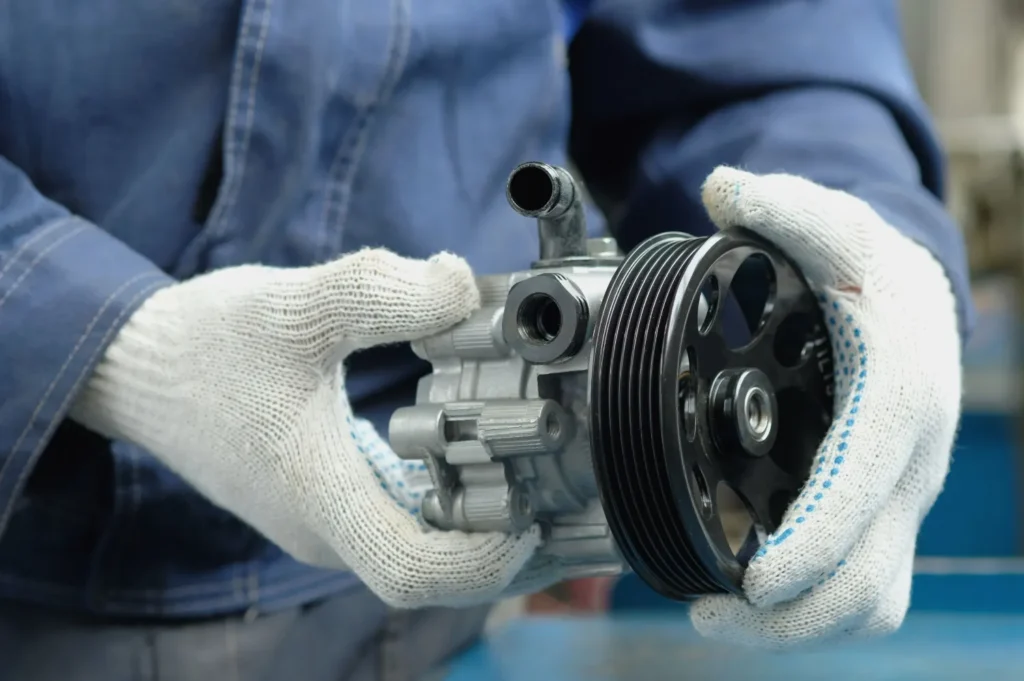
Power steering pump failure due to age, contaminated fluid, or low fluid levels represents one of the most common causes of steering system problems. Over time, internal pump components wear, seals deteriorate, and bearings fail.
Fluid leaks from worn seals, damaged hoses, or cracked reservoirs create multiple problems throughout the system. Seals naturally deteriorate over time due to heat cycling, chemical exposure, and normal wear.
Contaminated fluid accelerates wear on components. Over time, the fluid breaks down, loses its lubricating properties, and becomes contaminated with metal particles, seal material, and moisture.
Rack and pinion problems causing imprecise steering or fluid loss affect the component that translates your steering wheel rotation into lateral movement of the front wheels.
Belt issues in hydraulic systems, leading to intermittent power assist loss, occur when the serpentine belt that drives the power steering pump becomes worn, glazed, or improperly tensioned.
Modern power steering systems—whether hydraulic, electric, or hybrid—require specialized knowledge and diagnostic equipment for accurate repairs.
The JCB Euro Difference: Expert Repairs Without Dealership Prices
At JCB Euro, we understand your frustration. You want your vehicle repaired safely and reliably without paying exorbitant prices. That’s why we specialize in diagnosing and repairing power steering systems across all makes and models. Our technicians have extensive experience working with domestic, European, and Asian vehicles, giving us the expertise to handle any power steering problem regardless of your vehicle’s manufacturer.
We’ve invested in the diagnostic equipment, specialty tools, and ongoing training necessary to service modern power steering systems properly. Whether your vehicle uses traditional hydraulic power steering, the latest electric power steering technology, or a hybrid electro-hydraulic system, our team has the knowledge and equipment to diagnose problems accurately and perform repairs correctly the first time.
Our Power Steering Repair Process:
Comprehensive Diagnostics using manufacturer-level equipment means we identify the exact issue—no guessing. For hydraulic systems, this includes checking fluid levels and condition, inspecting all hoses and connections for leaks, testing pump pressure output, and evaluating rack and pinion operation. For electric power steering systems, we connect advanced diagnostic scanners to read fault codes, monitor sensor data in real-time, and perform manufacturer-specified tests.
Transparent Communication means we provide photo and video documentation of the problem, explain the necessary repairs, and offer a clear estimate with no surprises.
Expert Repairs using quality OEM or premium aftermarket parts ensure lasting results. We source components from reputable manufacturers that meet or exceed original equipment specifications.
Thorough Testing after repairs means we test-drive your vehicle to ensure smooth, quiet, and responsive steering.
Why Choose JCB Euro?
Specialized Expertise in servicing all vehicle makes and models, including domestic, European, and Asian brands, sets us apart from general repair shops that may lack experience with your specific vehicle.
Honest Assessments mean we only recommend necessary repairs—no upselling.
Convenient Location at 4747 S. Santa Fe Dr., Englewood, CO 80110, makes it easy for drivers throughout the Denver metro area to access our services.
Clear Communication means you’ll always know what’s happening with your vehicle.
What Happens When You Ignore Power Steering Problems?
Delaying repairs can lead to serious consequences that extend far beyond the inconvenience of difficult steering.
Increased Safety Risks occur because steering becomes unpredictable, making emergency maneuvers difficult or impossible.
Secondary Damage develops when a failing pump contaminates the entire system, turning a relatively simple repair into a major overhaul.
Lower Resale Value results because buyers will walk away or demand significant price reductions if they detect steering issues during test drives or pre-purchase inspections.
Stress and Anxiety from constant worry about steering failure affects your daily life and relationships.
Our Power Steering Services
We service all types of power steering systems, providing comprehensive repairs regardless of your vehicle’s technology.
Hydraulic Power Steering
Pump replacement and repair addresses the most common failure point in hydraulic systems.
Rack and pinion replacement becomes necessary when internal seals fail, internal components wear, or the housing develops cracks.
Hose replacement and fluid flushes address leaks and contamination issues before they cause major component damage.
Electric Power Steering (EPS)
Motor diagnosis and replacement requires specialized equipment to test motor function, measure current draw, and verify proper operation.
Control module programming may be required when replacing electronic components or updating system software.
Torque sensor testing verifies that the system can accurately measure your steering inputs.
Electro-Hydraulic Systems
Electric pump motor replacement addresses failures in the motor that drives the hydraulic pump.
Hydraulic component service includes all the traditional hydraulic system repairs—rack and pinion service, hose replacement, and fluid maintenance.
System calibration ensures that the electronic controls, hydraulic components, and sensors all work together properly.
Stop Worrying and Start Driving with Confidence
A failing power steering system doesn’t just affect your vehicle—it affects your peace of mind, your family’s safety, and your daily routine. At JCB Euro, we’ve repaired hundreds of power steering systems and know exactly how to diagnose and fix yours correctly.
Call us today at (720) 548-6804 to schedule your diagnostic evaluation. Visit us at 4747 S. Santa Fe Dr., Englewood, CO 80110, and let us restore your vehicle’s safety and reliability.
JCB Euro 4747 S. Santa Fe Dr. Englewood, CO 80110 (720) 548-6804
“